Nelsons’s BSO performs all-Rachmaninoff program with soloist Seong-Jin Cho
The orchestra performed Rachmaninoff’s second symphony uncut





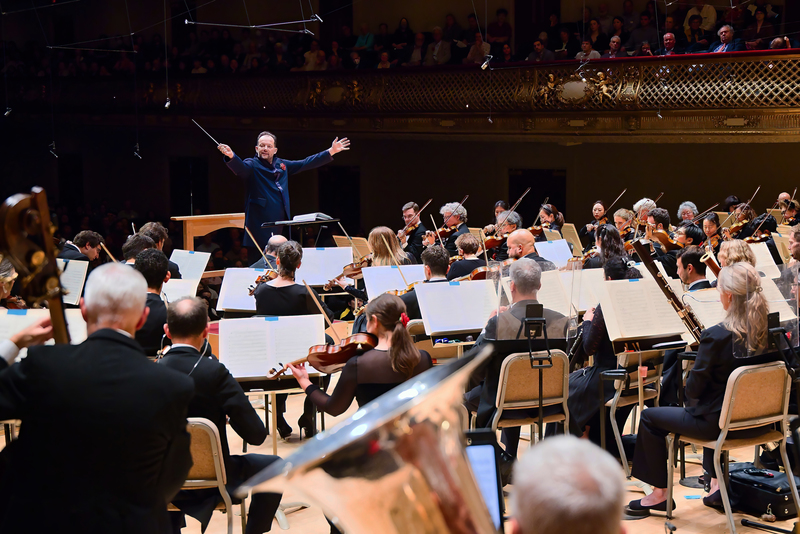
Photo courtesy of Hilary Scott/BSO
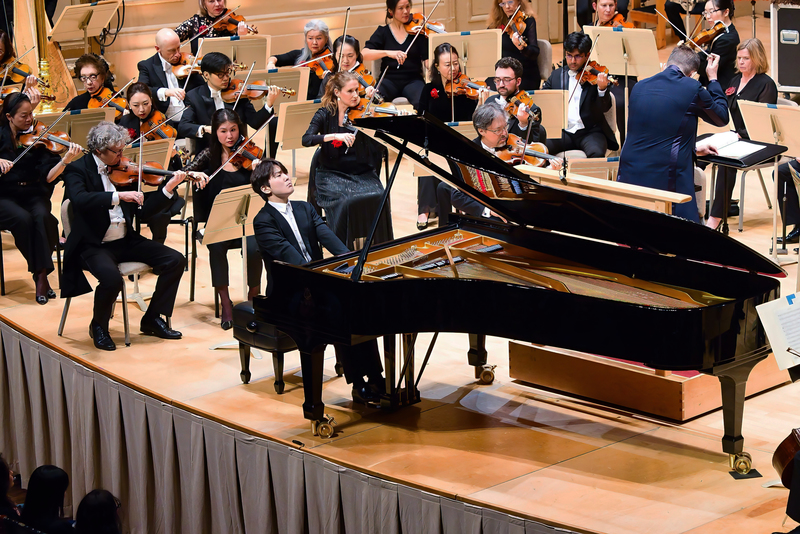
Photo courtesy of Hilary Scott/BSO
Rachmaninoff’s Rhapsody on a Theme of Paganini, Rachmaninoff’s Symphony No. 2
Featuring Seong-Jin Cho
Boston Symphony Hall
Oct. 2, 2026
Is Rachmaninoff one of the greats? The Boston Symphony Orchestra’s (BSO’s) all-Rachmaninoff program on Oct. 2 made a good case. Pairing Rhapsody on a Theme of Paganini with his second symphony gave us two sides of the composer: a brilliant pianist-showman and a symphonist with a gift for long, aching melodies. The weekend was also reminiscent of Rachmaninoff’s history with the BSO, as his 1909 US tour included a BSO appearance that marked his debuts as both conductor and soloist.
The concert began with the rhapsody, Rachmaninoff's last piece for piano and orchestra. Written in the summer of 1934, the composer previously played it with the BSO under Serge Koussevitzky on Christmas Eve and Christmas Day of 1937. Its 24 variations riff on Nicolo Paganini’s Caprice No. 24 for solo violin.
Seong-Jin Cho on the BSO’s Steinway piano demonstrated immense control in his musicianship. Despite the ring that accompanies Symphony Hall, he articulated each note distinctly. Cho achieved a remarkable dynamic range on the piano; his approach to quieter passages drew the audience to join what seemed to be a private conversation between the soloist and orchestra. In the softest passages, however, his blending with the orchestra seemed to be more difficult, and the delicate balance occasionally felt fragile rather than seamless. In the brisk Variations XV and XX through XII, Cho stayed composed, every move seemingly calculated, every run placed exactly where he meant it. His interpretation of the famous 18th variation was paced beautifully and was undoubtedly memorable to the audience, who broke the silence between Variations XVIII and XIX with hushed murmurs of approval.
Rachmaninoff’s approach to the rhapsody is less about each variation of Paganini’s Caprice No. 24 than about the legacy of Paganini, a quintessential Romantic virtuoso who bewitched audiences with superhuman technique and gaudy showmanship. Rachmaninoff was retelling Paganini’s music as acrobatics in the rhapsody, and Cho made it look easy.
For his single encore, Cho played Tchaikovsky’s The Seasons, Op. 37a: “October: Autumn Song,” a fitting selection given Tchaikovsky’s pertinence in Russian Romanticism and role in Rachmaninoff’s life as a hero and mentor.
Following a precise start, the program took the audience back twenty years to Rachmaninoff’s lengthy second symphony. The symphony let the BSO open up, and their sound was alluring, warm, and full. Intonation in a long Romantic symphony tests stamina, and brass sections generally have a habit of creeping sharp as the players get tired. However, the BSO brass stayed steady from the opening movement through the finale, and the grand choral passages rang without strain. The clarinet solo in the third movement (“Adagio”) was gorgeous. It is one of the great melodies in the orchestral repertoire, and its performance was beautiful. The solo violin was just as lovely, its sound resonant and clear even against the large orchestra, maintaining its voice and never getting swallowed.
The Second Symphony was performed uncut, though notably without a repeat after the exposition in the first movement. Early in the piece’s history, many cuts were made as conductors believed the symphony was far too long and repetitive to be played in full. The BSO’s performance honored Rachmaninoff, who had once expressed his disdain for cuts to his conductor friend Eugene Ormandy: “It is like cutting a piece out of my heart.”
When the orchestra stood to take its bow, something else caught the eye. Many musicians wore a red rose pinned to their concert black, like a barrette or boutonniere. Before the concert, volunteers were handing out roses outside Symphony Hall in a campaign to keep their conductor on the podium. Nelsons himself wore one.
The program was also a hopeful performance early in the season. The orchestra sounded impressively unified under Nelsons’s conducting, and the roses were a reminder of how much this ensemble and its audience care about Nelsons. This season, the orchestra plans to complete its Mahler symphony cycle, and also has Beethoven piano concertos with Lang Lang, works by Strauss, and both Stravinsky ballets on the calendar. A strong performance early in the season like this concert builds momentum for a memorable year.