In Memoriam: Thomas Rose, archaeometallurgist and assistant professor of materials science
Rose died on Sept. 2 due to injuries sustained in a bike accident on Aug. 21





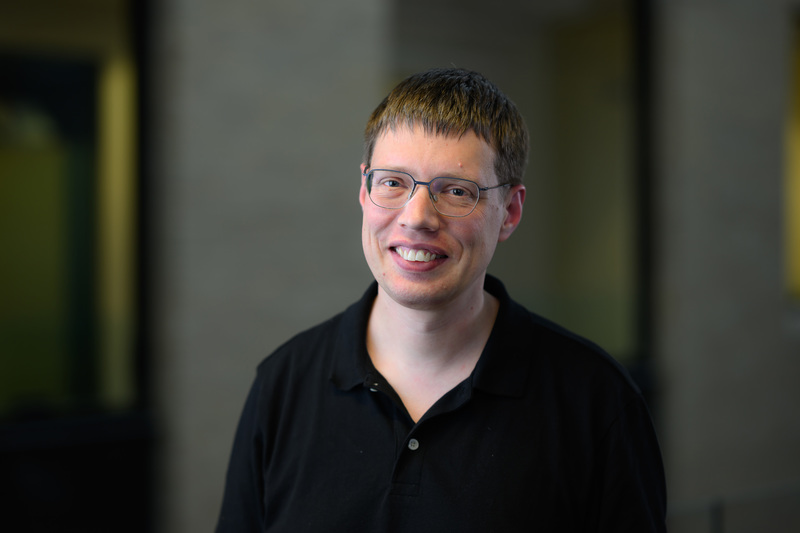
Photo courtesy of Gretchen Ertl
Thomas Rose, an assistant professor of materials science, died on Sept. 2 due to injuries sustained in a bicycle accident. Rose was 37.
Rose was struck by a car on his bicycle at the intersection of Memorial Drive and Massachusetts Avenue around 6 a.m. on Friday, Aug. 21, just a couple yards from Maseeh Hall. The incident is under investigation by the Massachusetts State Police.
An archaeometallurgist who joined MIT this January, Rose was still setting up his lab. According to his colleagues in the Department of Materials Science, he was looking forward to teaching his first class at MIT, 3.984 (Materials in Ancient Societies I), this fall.
“It’s an archeological materials graduate class. With Thomas coming, we were all excited about him teaching because of his geochemistry background,” said Senior Lecturer Michael Tarkanian ’00 SM ’03, who worked closely with Rose. “We’ve had one of the biggest enrollments in recent memory, partially because people wanted to take the class with Thomas.”
Born in Berlin, Rose earned his bachelor’s and master’s degrees from Goethe University Frankfurt. In 2023, he completed his Ph.D. in archaeology through a joint doctoral program at Ben-Gurion University of the Negev and Sapienza Università di Roma. His doctoral research focused on the emergence of copper pyrotechnology in Western Asia.
Before joining the Institute, Rose researched in Germany at Deutsches Bergbau Museum Bochum and Goethe University Frankfurt. His work blending archeology, geochemistry, and materials science made him a valuable asset to the materials science department.
“Thomas’s expertise in archeo-metallurgy was unique. It took our department decades to find a faculty who would be a world-class metallurgist and a world-class archeologist. He was a unicorn,” wrote Professor Polina Anikeeva, head of the Department of Materials Science and Engineering.
At MIT, Rose served as a faculty member in the Center for Materials Research in Archaeology and Ethnology (CMRAE). He was set to be the successor to a rich history of pioneering professors at MIT exploring the intersection of archeology and metallurgy.
“Professor Cyril Stanley Smith, the lead metallurgist on the Manhattan Project, spent his career after the 60s working on archeological metals at MIT. Then, Professors Heather Lechman and Dorothy Hostler came to the department and they retired,” Tarkanian said. “Thomas was hired to fill that archeological medals role. There are other people in the department that do archeological materials work. But Thomas was the only professor that was doing solely archeological work.”
Rose was also elected as the president of the Young Earth Scientists Germany chapter, which serves to support young researchers under 35 in geosciences, foster international collaboration within the discipline, and strengthen outreach.
This is not the first time an MIT community member has been a victim of a fatal bicycle-car collision. In 2024, Minh-Thi Nguyen, a third-year graduate student studying experimental physics, was killed while riding her bike home near Kendall Square. In 2013, MIT visiting scientist Dr. Kanako Miura died at 36 after being struck by a motor vehicle while riding her bicycle in Boston’s Back Bay neighborhood.
In a statement to The Tech, the City of Cambridge noted that Memorial Drive is a state road, and, as such, is managed primarily by state agencies. According to the city’s annual crime report, there were 197 reports of bicycle crashes in Cambridge in 2024. In recent years, Memorial Drive has received and is still undergoing several upgrades, catalyzed in part by a cyclist’s 2024 death.
While his colleagues knew him as an incredibly dedicated and passionate academic, Rose enjoyed rowing on the Charles and was a member of MIT’s Archery Club outside the classroom.
“I think he was all in on MIT. He was here all the time, day and night, focused on getting his lab up and running and training students,” Tarkanian said.
“He was filled with a genuine sense of wonder and excitement. MIT was his dream-come-true. Thomas was just so happy to be pursuing his vision and working with his students. He was humble and kind and curious,” Professor Anikeeva wrote.
Most of all, though, those who worked closely with him remember Rose for the warmth and humility he brought as a person.
“It’s difficult to lose a colleague and a brilliant person that you could see succeeding academically at MIT. And it’s even more difficult to lose someone with those attributes that also was a great person,” Tarkanian said. “Us missing him as a person is the worst part of all this. I really liked him a lot. It’s a total tragedy.”