In Memoriam: Susumu Tonegawa, Nobel laureate and founding director of the Picower Institute
Tonegawa was the sole recipient of the Nobel Prize in Physiology or Medicine in 1987





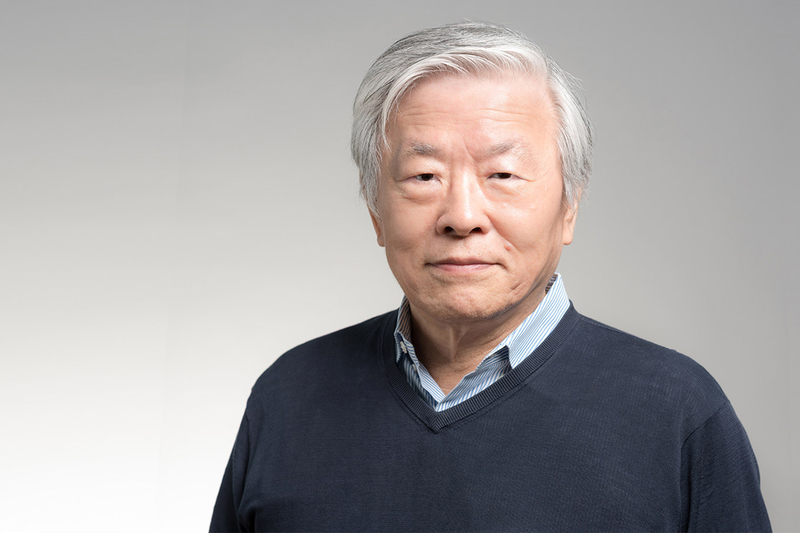
Photo courtesy of Webb Chappell
Susumu Tonegawa, an MIT Professor of Biology and Neuroscience and founding director of the Picower Institute, died on July 11 at his home in California. He was 86.
A molecular biologist who reshaped immunology and, later, neuroscience, Tonegawa won the Nobel Prize in Physiology or Medicine in 1987 for his work explaining how the immune system can generate an almost limitless diversity of antibodies from a relatively tiny set of genes. Professor Tonegawa had served on MIT’s faculty for more than four decades.
Susumu Tonegawa was born in Nagoya, Japan on September 5, 1939, the second of four children. His father worked as an engineer at a textile company, and as a child, Tonegawa moved from village to village in rural Japan following his father.
When Tonegawa reached adolescence, his parents sent him to a prestigious high school in Tokyo, where he developed an interest in chemistry. After failing the entrance exam once, he was admitted to Kyoto University to study chemistry. In senior year though, after having read papers by François Jacob and Jacques Monod on the operon theory, he became fascinated by molecular biology, and soon decided to pursue graduate studies in the field.
Initially, he intended to pursue a Ph.D. in Japan, and was admitted to Professor Itaru Watanabe’s laboratory at Kyoto. But Watanabe advised Tonegawa that studying in America instead was advantageous, so Tonegawa eventually began his doctorate in molecular biology at the University of California, San Diego in Professor Masaki Hayashi’s lab, which he completed in 1968.
He then moved across the street for his postdoc at the Salk Institute in the laboratory of Dr. Renato Dulbecco, later a winner of the 1975 Nobel Prize in Physiology or Medicine.
In 1970, when Tonegawa’s U.S. visa was set to expire, he had to leave the country for two years. On Dulbecco’s advice, he headed to Switzerland to join the newly formed Basel Institute for Immunology in 1971. The only problem was that as a molecular biologist, he knew very little about immunology.
Despite that, he immersed himself in the field and soon began applying new techniques from molecular biology, like recombinant DNA, into his work on immunology. He became fascinated with the longstanding mystery of antibody diversity, and his research at Basel finally cracked it.
He discovered that each antibody is not encoded by its own gene; instead, gene segments encoding different parts of the antibody can be recombined in seemingly limitless ways. It was the work that won him the Nobel Prize and numerous other accolades before and after.
Since then, thanks in part to his work, immunological therapy has become one of the most powerful tools in modern medicine. And Tonegawa, having felt that the problem of antibody diversity was solved, pivoted from immunology to cancer research and, then, neuroscience.
Reflecting on his time in Switzerland in his Nobel Biographical, Tonegawa recalled that from 1974 to 1981, his research team “progressed with great speed” and had “a great deal of fun.”
Seeking a new research environment and to return to the United States, Tonegawa joined MIT’s faculty in 1981 as a professor in what is now the Koch Institute for Integrative Cancer Research.
At MIT, Tonegawa first studied T-cells, a type of white blood cell. Later, he pivoted to neuroscience, and he was chosen as the founding director of MIT’s Center for Learning and Memory in 1994, which became the Picower Institute in 2002.
He served as the director of the Picower Institute for Learning and Memory until the end of 2006, and his lab made significant contributions to memory research. In 2013, they published a Science article in which they report identifying “engrams,” physical and biochemical traces in the brain that represent specific memories, in the hippocampus. As a result, they were able to implant mice with “fake memories” that the mice perceived to be real.
When asked about his research philosophy in a Picower Institute interview in 2022, Tonegawa said that he has always been driven solely by “curiosity and instinct.”
“When I decided to become a scientist, my criteria of what to do was whether the scientific problem I got to solve was interesting or not. I didn’t think about other things like: Could it be too risky? Can I really develop my career by venturing into a field I am not familiar with? That never occurred to me,” Tonegawa said.
His ashes will be buried in Kyoto, Japan following a private funeral.