MIT Mock Trial advances to National Championship for the first time
Yeoh: “We showed people that MIT Mock Trial is not to be underestimated”





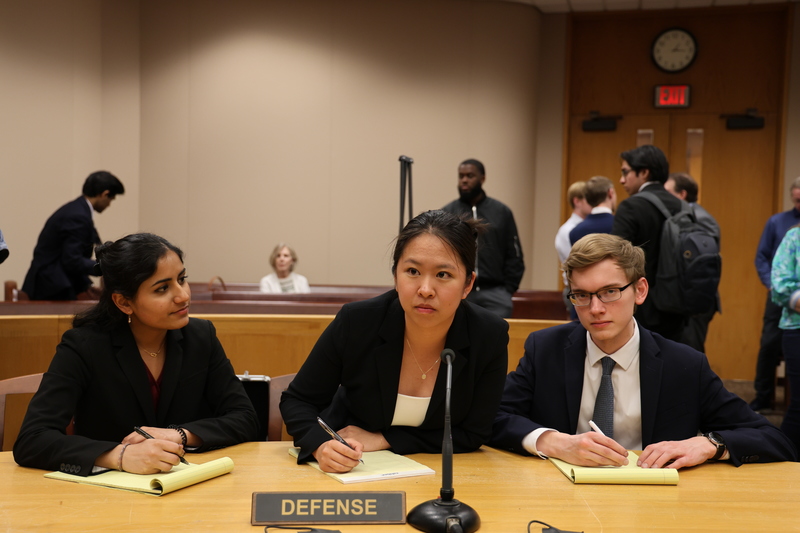
Photo Courtesy of Kaitlin Yeoh
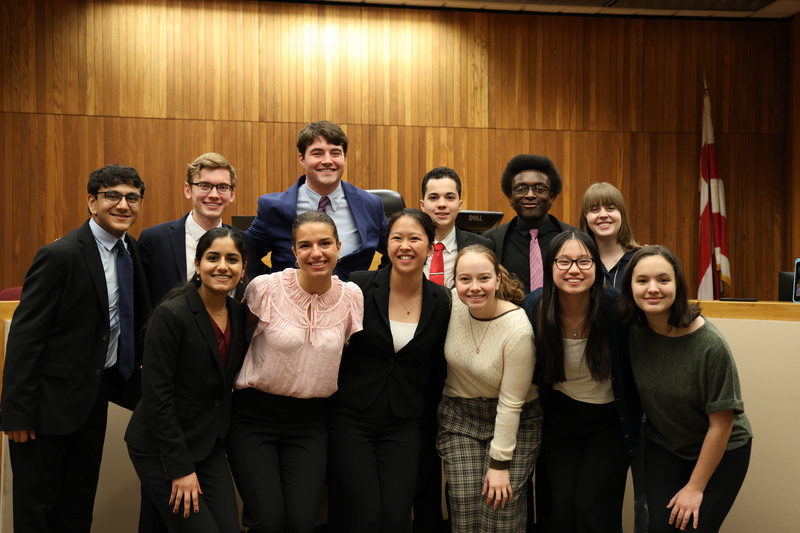
Photo Courtesy of Kaitlin Yeoh
A three-way tie. Two more spots for Nationals.
Going into the awards ceremony at the Opening Round Championship Series (ORCS) Tournament in New Rochelle, N.Y., the MIT A Mock Trial team was “full blind,” with no knowledge of their win/loss ratio. Their crucial final round was against the University of Maryland (UMD) — one of the best teams in the country — and would decide if they qualified for the National Championship Tournament.
For Kaitlin Yeoh ’28, time seemed to slow down as the first bid was announced.
It was MIT.
The eight-person team immediately leapt to their feet in excitement, screaming and hugging each other as they celebrated a long-awaited accomplishment.
“I was so happy. This year has truly felt like the culmination of all 11 years of hard work that members before us put into this program,” Yeoh said. “It’s such a storybook ending.”
The MIT Mock Trial organization, composed of 25 students competing across three teams, was founded in 2015 by current head coach Brian Pilchik. This year marks MIT’s first-ever qualification to the National Championship.
“MIT has had years where we’ve come very, very close,” Pilchik recalled. “In 2021, we just missed the cutoff; we would have been the next team out. So it was only a matter of time.”
This year, over 800 teams competed in mock trial; MIT was in the top 6% that advanced to Nationals. But for team member Darius Sinha ’28, MIT Mock Trial’s achievement is bigger than the competition itself.
“What our team has shown is that MIT students can do more than STEM, and can go on to be leaders in public speaking and advocacy,” Sinha said.
The road to Nationals
Students in Mock Trial compete in simulated court trials as attorneys and witnesses, working together as attorney-witness pairs to argue their case.
Every July, the American Mock Trial Association (AMTA) releases the official case materials for the year. After tryouts in early September, MIT Mock Trial workshops their arguments and narratives, competing in invitational tournaments in the fall. Then, the three teams — A, B, and C — face off against other schools in official regional tournaments in January and February to earn bids to the ORCS tournaments. From there, the top 48 teams from across the nation qualify for the National Championship in April.
Teams going to Nationals pivot to an entirely new case. With only a month to fully prepare for the tournament, it becomes a race to build the most compelling strategy. Pilchik compared the experience to “living an extra semester in the span of a month.”
“Our team met up with each other almost every day for those four weeks to write content, practice, [and] scrimmage other teams,” Hannah Rose ’26 said.
This year, Nationals took place from April 17 to April 19 in Washington, D.C., where the MIT Mock Trial team competed in real courtrooms for the very first time. Led by co-presidents Iva Goel ’26 and Benjamin Lammers ’26, MIT A — which also includes Rose, Sinha, Yeoh, Ava Muffoletto ’26, Dubem Echezona ’27, and Vivian Dinh ’29 — finished 16th out of 26 teams in the CUA Law division, posting a 5–7 record.
Yeoh highlighted the last two rounds of Nationals as particularly memorable. MIT faced UC Berkeley and Boston University, two teams that went on to place in the top five of the division. Despite the challenge, the team left with a sense of accomplishment.
“Getting to see them perform really opened my eyes to the way other teams run, and I think we put up a good fight against them,” she said. “We showed people that MIT Mock Trial is not to be underestimated.”
Beyond the tournament, team members shared that the most meaningful part of the experience was each other. Whether it was practicing their case around the clock or exploring the D.C. area in their downtime, the trip brought the MIT team closer together.
“What I'll remember most… is how we supported each other, learned from each other, and bonded together,” Dinh said.
Future aspirations
While four seniors on the A team will graduate from the Institute in May, leaving several spots open next season, the team believes they are well-positioned for future success. Some plan to return as alumni mentors, and according to Sinha, they have all “passed down their wisdom.”
With the Nationals barrier finally broken, the remaining members expressed a desire to pursue even greater accomplishments next year. They seek to improve by learning from other teams, reflecting on their experiences, and adapting to new challenges.
“We are so excited to take on next year’s case and to show to the world that MIT’s showing at nationals wasn’t a one-off occurrence,” Sinha said.
Jada Ogueh ’29 contributed to reporting for this article.