From non-runner to marathon runner
My four-year journey of long distance running





Vivian Hir–The Tech
Vivian Hir–The Tech
Vivian Hir–The Tech
When people ask me when I started running, they are often surprised to learn that I began during my freshman year at MIT.
Growing up, I hated running. The most I ran was 1.5 miles for my high school PE class. Although my mile time was above average, I found running to be an awfully boring, exhausting, and painful activity. I never understood why someone would enjoy running. I mean, what joy could come from physical exertion?
It wasn’t until my first year of undergrad that I became interested in running. During winter break, I reflected upon my relatively sedentary first semester. I decided to adopt a more active and healthier lifestyle for the new year. I began the year by running a mile at the local 400-meter track. I was slow, but at least I started somewhere. I continued doing short runs that were between one and two miles throughout IAP and the spring semester, but I did not have a regular running habit. What truly sparked my interest in running was an interesting conversation I had with a volunteer at the Happy Beaver Invitational, a running meet hosted by the MIT Running Club.
The volunteer was a friendly old man who was well-versed in running marathons. I told him I was just there to volunteer and never saw myself running long distances, but he encouraged me to reconsider, sharing that his wife had gone from barely running to finishing a marathon within a year by training with a team. If someone like her could do it, then what excuse did I have? Perhaps running a marathon wasn’t such a crazy and delusional idea after all. I was 18 years old, a young and healthy adult. If there was an ideal time for me to start running, it was now.
Feeling inspired after the invitational, I searched for 5k runs nearby. I was happy to find a weekly 5k event called Parkrun, a free, community event that was beginner-friendly. When I went to my first Parkrun in mid-April, I found the run difficult, but it went better than I expected. It was perhaps the first time in my life when I finally comprehended the idea of running as a fun and social activity. The excitement and infectious energy from the other runners nudged me to change my attitude towards running.
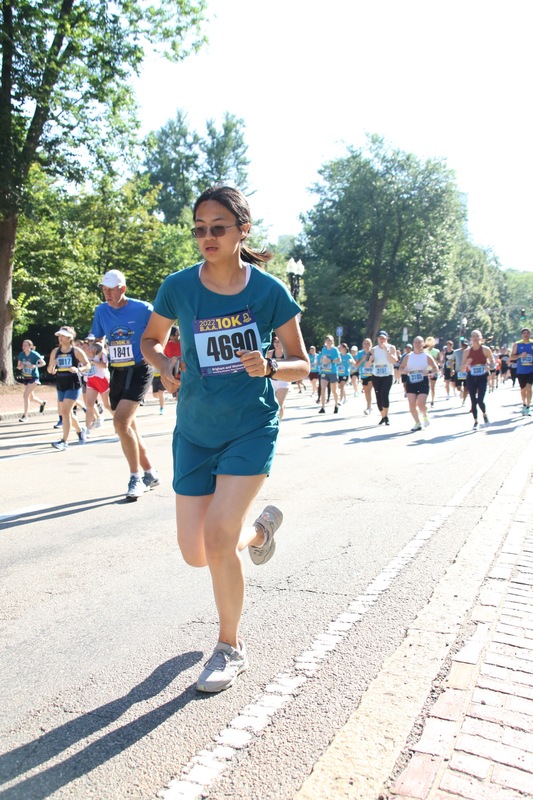
I felt motivated to go to more Parkruns, so for the rest of the semester, I went to one every Saturday to build up my confidence in running a 5k. Once I was able to run a 5k without feeling the need to stop, I decided to run the B.A.A. 10k in June, then the B.A.A. Half Marathon in November. After I completed the half marathon, I was unsure what my next running goal would be. I was already very happy that my running and stamina improved significantly in less than a year, but training for another half marathon didn’t excite or interest me that much. On the other hand, training for a marathon would provide me with a new challenge, even though the training plan looked daunting at first glance. I signed up for the 2023 Providence Marathon that sophomore spring. However, it wasn’t until three years later that I finally ran the 2026 Providence Marathon.
Training for the marathon
In my first year of marathon training, I unfortunately injured my hamstring two weeks before the race, and did not recover by race day. I signed up again in junior year, but only three months into my training, the marathon was unexpectedly canceled.
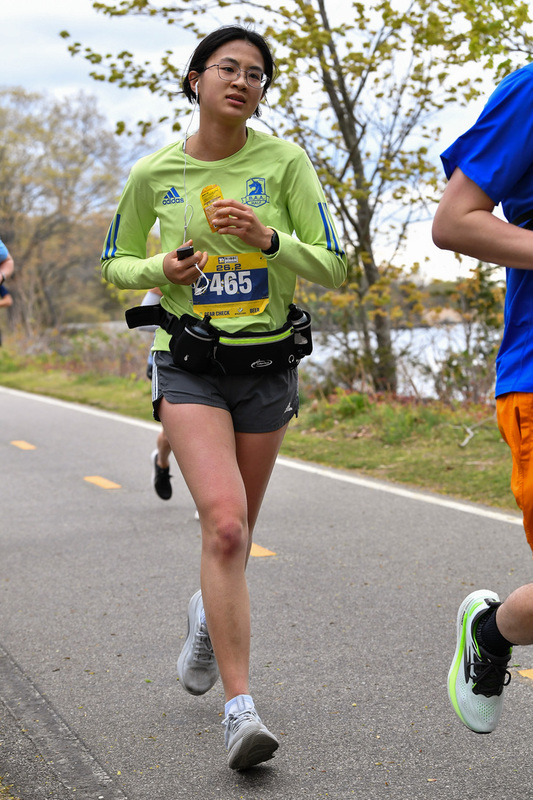
In the end, I ran my own marathon route in early May, which consisted of the Minuteman Bikeway, Fresh Pond, and Memorial Drive. The marathon went surprisingly well: somehow, I experienced a runner’s high throughout the entire run, even though my legs and feet started to feel tired around mile 20. When I reached my destination of Tang Hall, I was so proud of myself for finishing the marathon. However, I still wanted to run the Providence Marathon because the race was USATF-certified, meaning that its distance is accurately measured. Although Strava said that I ran 26.23 miles, the app had consistently overestimated my distance by a small margin in past runs, so I considered my first marathon unofficial.
In senior year, I considered running Providence, but before I registered, I got a bone bruise from a fall during IAP and couldn’t run until April. Despite the long recovery period, I was able to run the Cambridge Half in the fall, which gave me the confidence to train for a marathon in the upcoming spring.
On New Year’s Day, I decided to register for the Providence Marathon and pay the $110 registration fee. Although I could have registered later in the month, there was something symbolic about committing to a marathon on New Year’s Day. It was a resolution that I wanted to complete, to run Providence after three years of setbacks. I wanted to begin my year with a commitment to maintaining my health and achieving ambitious goals.
For four months, I trained for the marathon. Although there were times I didn’t feel like running because I was tired or busy, I overall enjoyed each of my runs, whether they were six-mile loops around the Charles River or long runs that ranged from 15-20 miles on weekends. Whenever I got bored of running along the Charles River, a route that I have run countless times, I decided to explore unfamiliar places on my long runs, from Newton to Winchester.
What I like the most about running is its meditative nature. There’s something powerful about continuously moving for a long period — it allows me to clear my thoughts instead of letting them stay in one place. When I run, I try to focus on the present moment, instead of letting my thoughts distract me. By doing so, I have become comfortable embracing boredom on my runs. Besides practicing mindfulness, running encourages me to go outside and appreciate my natural surroundings. Although Cambridge and Boston are urban, the Charles River and other parks like the Emerald Necklace have many trees, which offer some semblance of nature. After spending a whole day indoors working in front of a monitor, it’s always nice to get a breath of fresh air and enjoy the view on my run.
Running the Providence Marathon
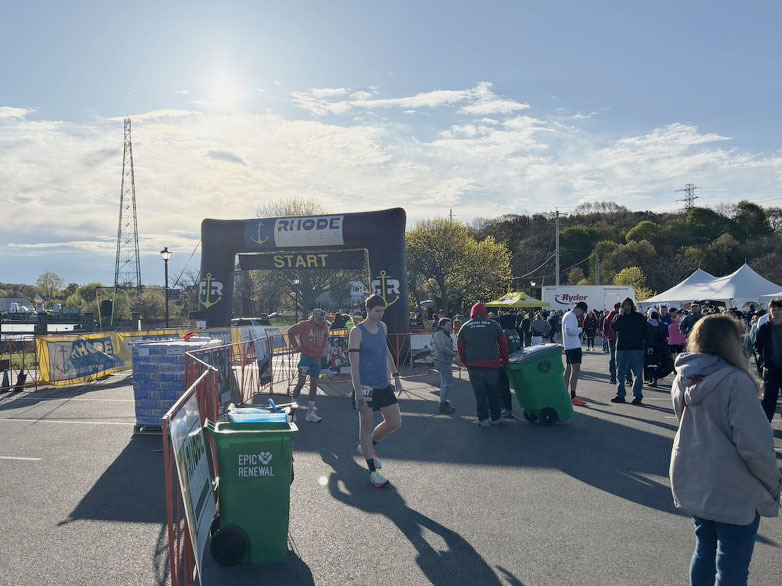
After 16 weeks of training, race day finally came. The day before the marathon, I couldn’t help but worry about what would happen on race day, like getting severe leg cramps or hitting a wall of exhaustion. Even though I followed the runs on my training schedule, which included a 20-mile run, 26.2 miles felt like a distance on a whole new level. When I arrived at the start line at Bold Point Park, however, my worries began to ease. The sunny, blue sky had wispy clouds, and I could feel a gentle breeze near the clear river. Although the temperature was on the colder end, I looked forward to running a marathon in this weather.
For the first half of the marathon, I had a delightful experience. After crossing the Linear Park Bridge, I ran along the Seekonk River, a scenic riverfront route. Then, I got to explore the peaceful, quiet residential neighborhoods of Providence and Pawtucket, where historic homes had neatly trimmed lawns and nice tree-lined streets. Based on my watch, my average mile time was faster than I had expected, which made me feel quite confident about finishing within four hours, even if that meant a slower mile time towards the end.
The second half of the marathon route was in East Providence and Barrington. The route was first the East Bay Bike Path, a route with impressive coastal views, followed by a large loop around the Rhode Island Country Club, and then back to the East Bay Bike Path. When I crossed the half-marathon mark, I was happy, but it felt like false optimism — I was only halfway done. Yet it felt like I had already run so much. It was too early for me to know what the end would be like. There were around 13 more miles to go, which meant about 2 more hours of running.
Between miles 14–16, my excitement gradually dissipated because I still had a long way to go. I also started to feel bored, probably because there were fewer things to see on the route and my iPod finished playing all my Fall Out Boy songs. I also noticed that my average mile time began increasing slightly, but it was nothing out of the ordinary and did not concern me. But around mile 18, running felt much harder than before. Part of the reason was the strong wind, but my legs and feet felt much heavier. I wasn’t in pain, but my body felt a lot more exhausted, causing me to drastically slow down.
When I saw the mile 20 marker, I felt a lot more hopeful, even if that meant I still had 6.2 miles to go. But my hope was fleeting because my mind returned to thinking about how heavy my feet felt, as if they were bricks. Consuming energy gels helped, but they were not enough to replace my depleting glycogen levels.
The last 6.2 miles felt like the longest part of the race, as if time got significantly stretched and all the time before that got compressed. I noticed that my mile time was higher than my mile time in the first half, and by this point, I wasn’t sure if I could make a sub-four-hour marathon. I was nervous at first, but I quickly adjusted my expectations and told myself that I should be happy to finish the race without getting any injuries in the end. In other words, my baseline expectation was to keep moving: just lift one foot at a time and look ahead.
Besides feeling much more tired, what made the last 6.2 miles worse than the first 20 miles was the strong winds on the waterfront route, which made running a lot harder. I was glad it was not raining, which the weather forecast initially predicted, but the wind was just as undesirable. Despite the challenging stretch, a positive thing was that I got to see a nice view of the expansive tidal river. The upbeat rock music also helped me dissociate and distract my mind from thinking about the exhaustion. But when I saw the sub-four-hour pacer come up to me around mile 23, I started to feel stressed, because if I could not run ahead of him, then I was not going to make my goal. On the upside, having him near me forced me to speed up.
Seeing the mile markers in the last 6.2 miles of the marathon felt like bigger victories than before, but the finish line still felt so far, and all I could think about was wanting this run to end. While I kept moving, it felt like time did not. It wasn’t until I saw the mile 26 marker that I felt ecstatic, a feeling that lasted for the remaining 0.2 miles of the race. I knew that I could run 0.2 more miles, or about 2 more minutes of running.
The 0.2 miles felt twice as long, but when the finish line was in my sight, I couldn’t believe that I was so close to reaching the end. For some reason, I didn’t really notice the spectators who cheered or processed what they yelled, probably because I was so focused on crossing the finish line that my mind filtered them out. When I saw the live stopwatch near the finish line, I was delighted to learn that my marathon time was a few minutes under 4 hours.
When I crossed the finish line, I thought I would feel immense joy, but I was just relieved. Somehow, crossing the finish line felt somewhat anticlimactic because everything was over. My four months of training culminated in approximately four hours of running, and I was done. Perhaps the anticlimactic feeling came from the event being on a much smaller scale compared to other marathons, like Boston and New York. At the same time, I also felt disbelief. I couldn’t believe that I was able to run 26.2 miles without stopping or getting injured.
I thought the rest of the day would feel joyous and celebratory, but that didn’t really happen, probably because my friends weren’t there to celebrate with me after the marathon. After taking a nice shower and checking out of the hotel, I ate a large breakfast burrito and overly sweet cheesecake at The Cheesecake Factory, which felt like two meals. Even though I felt bloated, I treated myself to an iced mocha at Sydney, a local café, then took the commuter rail and returned to my apartment.
Reflections
Even though the marathon was a mentally draining and physically taxing experience towards the end, I would have done it again. In hindsight, it was worthwhile and gratifying to persist and ultimately cross the finish line. Although the oddly specific distance of 26.2 miles exists for historical reasons, I also believe there’s a psychological reason for 26.2 miles. While it would have been nice to end at mile 20, it wouldn’t feel like a real marathon unless there was a significant physical and mental challenge; for me, most of this challenge happened in the end. Miles 20 to 26 forced me to keep going and not give up, while miles 26 to 26.2 gave me the final push to finish strong.
That’s not to say that nothing happens between mile 0 and 20. For me, the first 20 miles taught me the importance of being patient and acknowledging small wins, as each mile was instrumental in completing the marathon. Having to run this long distance has also encouraged me to enjoy the present moment, instead of being fixated on the end goal because that makes the experience lose its fun and meaning.
Overall, running the marathon has taught me that I can achieve difficult goals, even if they may seem impossible at first. It has driven me to be persistent, resilient, and have the courage to take risks. Besides having better physical health, marathon training has also motivated me to build strong habits in other areas, including diet and time management. Throughout my marathon training, I have considered how the mindset I have developed for marathon training can be applied to other parts of my life.
Like running a marathon, achieving big goals requires achieving small goals one at a time. Doing this requires consistency, dedication, and patience. Even if the ultimate goal may be large and overwhelming, it is important to celebrate progress along the way to reach that goal. Likewise, achieving goals means not making excuses. While it is tempting to think that something will be done later, it may never get done if one keeps making excuses.
I don’t know how long my body can run marathons for. For now, I hope that I can run one marathon a year, ideally a different marathon each time, so I can explore new places in the country and the world. One major item on my bucket list is to run all six Abbott World Marathon Majors (Boston, New York, Chicago, London, Berlin, Tokyo) before I die. I don’t know if I will be able to complete all of them, since my options are either lottery or charity entry because my time isn’t fast enough as of now. Even if I don’t make this goal, I would be very happy to even complete one of the six.
When I reflect upon how I have changed ever since I left home for college, the biggest positive change I can think of is becoming a runner. College has been full of ups and downs, but I am proud that I am able to run a marathon, a goal that I didn’t think was even conceivable four years ago.