Green Building Tetris hack returns after 10 years
The Tetris hackers spent four months redesigning the system for Campus Preview Weekend





Jojo Placides–The Tech
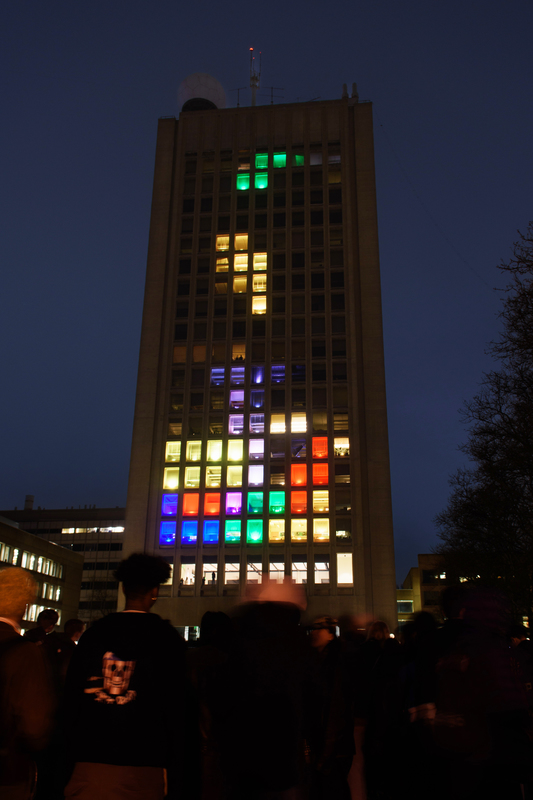
Photo provided by Daka Ejilemele
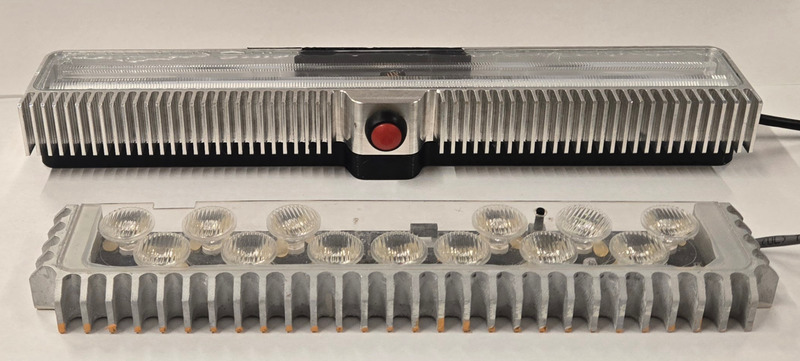
Photo courtesy of Tetris Hack organizers
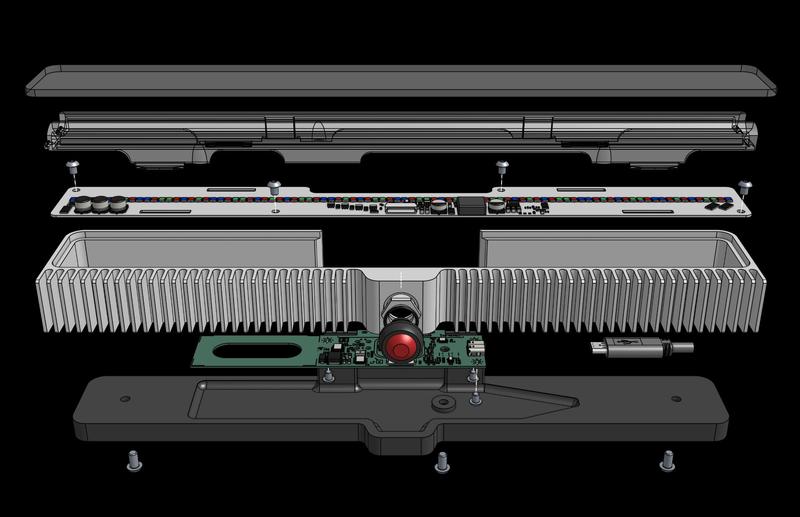
Photo courtesy of Tetris Hack organizers
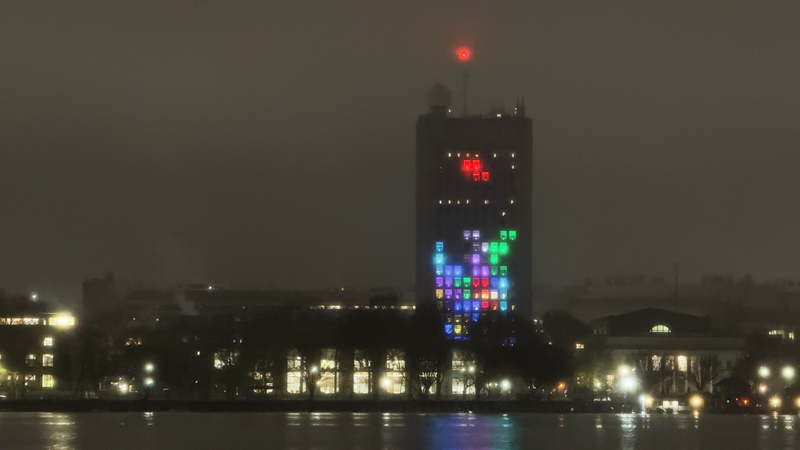
If you wandered onto the east side of campus the night of April 18, you likely saw giant Tetris blocks cascading down the 153 colored windows of the 21-story Green Building. A “holy grail” of a hack when it was first performed in 2012, the Tetris hackers — some new and old — spent four months redesigning the system from scratch in time for Campus Preview Weekend (CPW) 2026.
“It’s the kind of hack you hear about even before you get to MIT,” said one hacker. The hackers played Bad Apple before the Tetris game, running on an impressive 30 frames per second compared to 10–15 in 2012. The Green Building also lit up with the Sean Collier Memorial ribbon, remembering the MIT police officer killed in the Boston Marathon bombings, the Boston Marathon ribbon, and an Earth Day illustration.
While the Green Building no longer holds the title for largest screen Tetris has been played on, the original hack has inspired many other attempts, including the 460-LED display on Philadelphia’s Cira Centre building in 2014.
Costing around $30,000, the hack was mainly fundraised by generous alumni donors and required upwards of 2,000 working hours, according to the organizers. About 30 individuals helped with the manual labor of assembling the modules, but the core engineering and design rested on the shoulders of just eight people.
“Among the core group, there were at least three classes dropped for this project,” one of the hackers said. “There were two-week stretches where a few members on the team didn’t sleep at all.”
The return of Tetris Green Building Hack after a 10-year hiatus has roused a significant amount of attention both on campus and on social media, resolidifying its place among the Institute’s staple hacks.
The Tech interviewed three of the hackers involved in the project’s completion. Their names have been kept anonymous upon request.
Same dream, new goals
At the start of January 2026, the hackers set a hard deadline for CPW, with engineering beginning in November 2025. “We could have pushed it off, but we wanted to show the prefrosh how cool and fun MIT is,” they said.
Novelty was another motivation. “You don’t usually get to do a personal project that involves mass production,” the hackers noted.
The hackers also expressed that team members coming from a variety of class years and courses was not due to an intentional recruiting effort, but instead an organic combination of people in it “for the love of the game.”
While the old modules had an impressive shelf life given the gap in technological advancement in 2012 to 2026 — some functional as late as 2017 — this year’s hackers wanted to approach the redesign more intentionally. Degradation caused by factors such as corrosion on the printed circuit boards due to window condensation, yellowed plastic, and hot glue losing its adhesion necessitated a new design that would last at least ten years, which posed the majority of the build challenges.
“The goal of this is for Tetris and the Green Building to be able to keep being run even after we graduate,” one hacker said. “What we’re bringing to the table is more robust hardware.”
“This is hands down the hardest project I’ve ever done,” another hacker stressed. “We ran into an endless number of problems.” They added that correspondence with the original hackers was the first step to figuring out how to solve their problems.
The hackers also invested time into designing an efficient production process for the modules that would be installed in each of the windows of the building. This modularity posed a unique challenge in terms of scale. “If it takes one minute to assemble something on each module, just that one minute task stretches out into 2.5 hours of work across the entire quantity. And then, if you’re making something that works 99% of the time, across 153 units, you’re still gonna see one to two failures,” they explained.
Logistical issues regarding tariffs and shipping were a pain point; in addition, considerations like waterproofing, heat management, and software bugs prompted a great deal of trial and error. “If we were to do it again, and we had more time, I would have spent twice the amount of time testing, so that we wouldn’t have current weird issues, underperforming modules, and other kinks,” one hacker said.
The hackers also commented on the differences between this year’s modules and the ones from 2012. “The old module is very simple. A circuit board goes in an aluminum enclosure, glass goes on top, and that’s it. Ours has a lot more individual parts, which took a lot more work to assemble,” they said.
Despite this, the team highlighted technological advancements that made their work easier. “There were no good 3D printers in 2012. Those guys were hand assembling those boards. They got even less sleep than we did,” they said. This year’s organizers were able to order pre-made circuit boards and laser-cut glass from China.
When it came to the actual installation, the team had to consider another, sometimes overlooked, factor: the occupants of the building themselves. “In every single module we included an outlet splitter so the modules wouldn’t be taking up people’s outlets,” the team explained. “We also added a snooze button so people can turn off the lights for an hour.”
The hackers also intend to set a system that will enable regular upkeep for the hardware.
A national sensation
This year’s Tetris hack’s debut brought in a wave of viewers, both in person and on social media. Hundreds of prefrosh and current MIT students came out on the night of the hack’s reveal to try their hand at the massive puzzle, and crowds only grew as the spectacle turned heads from all the way across the Charles River.
“With the amount of time and work that we put into this, seeing it at the end of the day is very rewarding,” one hacker said. “Seeing the reactions from other people and how much joy it’s bringing is even better.”
Videos and pictures of the hack’s completion were seen trending on platforms like Instagram, Facebook, LinkedIn, and Reddit, garnering thousands of views within just one week. The Boston Globe also covered the event.
When asked about the future manifestations of the hack, the team said the hack was “definitely” returning next year, potentially showcasing Breakout or Snake.
The team said they hope the hack will inspire future MIT students to keep engineering big projects. “To be able to show people what MIT is about, and to make a statement that we still do big hacks, is important.”
“Hopefully, some of those people who played Tetris, when they are here, they’ll say, ‘I have this crazy idea. And if [these hackers] did that in four months, a lot is possible,’” they said.