Turning the calendar back to 2016
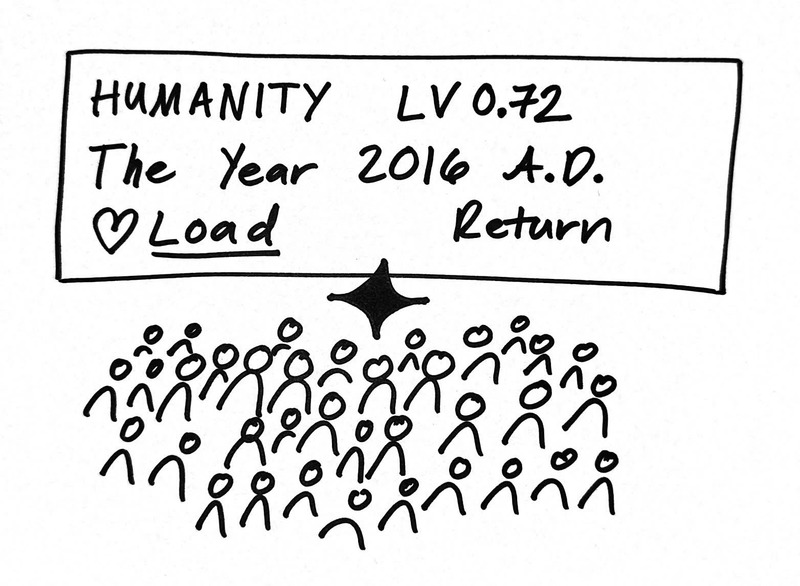
And why everyone is yearning to load back into the world’s last “save point”





Jojo Placides–The Tech
Picture this: the insane whirlwind of the modern day. You raise your head from your never-ending pile of problem sets. You see that the threat of nuclear war looms above you, and the sea levels rise and brood over America’s coasts. Every glance at a newspaper gives you a heart attack and a half. You look at your phone and see a stream of AI slop: a meaningless river of static that blends into a dreary, robotic gray.
Then, suddenly, you awaken in your childhood bed. It’s July 20, 2016. Sunlight bleeds through your innocent, pure curtains as chalky as the clouds themselves. Someone knocks at the door: your friends, who want to play Minecraft with you. The tune of “Get Lucky” by Daft Punk rings through the hallways. Instead of stressing over problem sets and midterms and social anxiety and questioning if everyone hates you, you build houses, find diamonds, and avoid zombies. In this short moment in time, the world seems like a vast, colorful place, yours for the taking.
Was the past decade a bad dream all along?
Nowadays, people across social media joke that everything past 2016 has been an enormous nightmare, and that maybe the great time-space continuum ruptured and sent our planet flying into an alternate universe of insanity, where nothing goes right. Following this, a huge surge of nostalgia for 2016 has swept through our generation. Endless posts reminisce over bottle flips, Pokémon Go, and skinny jeans.
Nostalgia isn’t just a personal issue. Yes, in isolation, it is: it’s practically a rite of passage when one has a simple yearning for childhood simplicity. I’ve been a lifelong victim of nostalgia. I’m an immigrant from the Philippines who has lived in the United States for four years. There hasn’t been a single second when I don’t reminisce about the simple, childhood days back home: warm sunsets after a long day of playing hide-and-seek in the playground, or colorful Christmas lights lining neighborhoods while we carolled from house to house. Nostalgia is practically home to me.
But when an entire generation starts developing nostalgia for the same period of time, you might start wondering: are there deeper factors in play? And why 2016, specifically?
The current consensus is that the 2020s is the decade from hell. Most of that consensus can be traced back to one observation: that humanity is no longer optimistic about technological progress. In previous decades, with one technological advancement after another, we became convinced that humanity could achieve even greater things. That’s why people back then — especially after the moon landing in 1969 — imagined our future as one of teleportation, flying cars, and interplanetary travel.
Recently, however, those developments have fallen out of touch with the original mission of actually helping people. Social media reduces people into likes and views to be fed into an algorithm; it harvests attention spans and diverts people’s eyes away from the skies and into their phones, scrolling endlessly for an unclear goal. It treats us like mindless animals: ever wondered why it’s called a social media feed? As a result, people subconsciously no longer view themselves as human beings with messy and complex emotions, but rather as mere numbers in the form of likes and comments. To make things worse, AI is now used to replace human creativity and thought, continuing the conversion of people to training data for deep learning algorithms. Never has the future looked so bleak, from AI slop and the enshittification of the Internet to COVID-19 and corporate minimalism. The more years pass, the more we try to create a virtual reality, and the more evident it becomes that we’ve immersed ourselves in a virtual insanity.
Besides the lack of technological progress, the reason people are so nostalgic for specifically 2016 is that the year was in many ways humanity’s last “save point” before social media and AI. To everyone outside of Generation Z, 2016 by all means was not a simple time, but one of change and transition, for better or worse. 2016 was a time of political upheaval: the spotlight of Washington D.C. shifted from Obama to Trump, and a huge crack formed in the political landscape, giving way to entanglement and chaos — a crack still extremely wide open in today’s political landscape. Additionally, 2016 was one of the last years before social media began looming over the lives of everyone. Since then, many of us have turned to acting with robotic nonchalance. People opt to doomscroll on their Instagram feeds, caught in a dopamine hamster wheel instead of facing the world and its salt and colors. [1]
When it comes to the insane time we live in now, 2016 was really where it all started. It was a boundary year, the threshold between an era of relative stability and an era of chaos: a year when a lot of important decisions were made. So maybe we picked the wrong decisions and got the bad ending. But where does that leave us? The clearest course of action, as one would do in a video game, is to return to a save point.
An important fact we must realize, however, is that this is not a unique spot that humanity has been in. Humanity has resented technological growth in favor of simpler times before: specifically, in the Romantic era of the late 1700s to early 1800s.
At that time, technology was rapidly developing. With the invention of the steam engine in the 18th century, society kicked off the first Industrial Revolution. Factories were popping up everywhere, and city skylines were lined with big, cylindrical chimneys that emitted smoke and polluted the air, converting what was once bright, blue, brilliant skies into a gray, monotonous, smoky one. Millions of workers incessantly toiled under factory owners who put them in cruel conditions just so they could make a quick buck.
When these technological advancements created miserable lives for people, there were bound to be those who yearned for a life more akin to times before those advancements: in a way, returning back to a “save point” before all the wrong decisions were made. People pushed to define a human as something much more than just a cog in a machine — a being with individuality and emotions and guts and rights.
In particular, romantic writers valued moral sensitivity and greater kindness to each other, especially to the marginalized and the poor. For example, Samuel Coleridge’s “The Rime of the Ancient Mariner” tells the tale of the Mariner who was cursed by the Albatross until he felt the genuine love for human creatures and learned that each creature deserves love and respect.
“O happy living things! no tongue their beauty might declare: / A spring of love gushed from my heart, and I blessed them unaware.” — Samuel Coleridge, “The Rime of the Ancient Mariner”
The romantics also emphasized the importance of authentic human connection. For instance, in Mary Shelley’s Frankenstein, the monster longs to connect with others as he watches a family from a window for months and learns their language.
Perhaps most central to the Romantic era was the love and wonder for nature, as people reconnected with the pastoral, rural countryside as opposed to their monotonous factory lives. Seeing giant waves crash into cliffsides. Avalanches cascade down snowy mountains. Big and wondrous clouds hovering over the lush, green landscape. Artists looked upon these monstrous scenes in nature — these little “spots of time,” as one of the great Romantic poets, William Wordsworth, called them — and felt a strange mixture of not only fear but of awe and wonder: what many called “the sublime.”
“From Nature and her overflowing soul / I felt the sentiment of Being spread o’er all that, lost beyond the reach of thought / And human knowledge, to the human eye invisible, yet liveth to the heart.” — William Wordsworth, “The Prelude”
In a way, people learned to love nature around them, to feel wonder in every sight they witnessed. They also learned to treat each other with empathy, respect, and love.
After all, aren’t we all a bit like Frankenstein right now? Aren’t we all longing for a deeper human connection? For a world where people are allowed to feel each flavor of each emotion instead of carrying on like nonchalant zombies?
Because if we’re following in the footsteps of those Romantic writers, then what might come from these recent nostalgia movements is a Neoromantic era. I’m a bit of an idealist, but what I really hope people learn from these sentimental bouts is that the only way we can move forward again is to:
Become kinder to each other and ourselves. While industrialists viewed people as a means to gain money, romantics viewed people as imperfect, beautiful beings of emotion and intellect. I hope more people will see each other this way: that everyone has a right to be treated with kindness because of their imperfections. That human thinking, despite all of its chaos and mess, cannot be replaced by AI; for the beauty of human thought cannot be replicated by matrices of ones and zeroes.
Taste every bit of joy and wonder in this vast world. While industrialists turned away from the towering forests and near-infinite grassy fields that were converted into endless factories, romantics viewed them as sights to be taken in: the expansive colors of the world being the reason they carry on day-to-day. I hope more people take their eyes off their phones and look up, for the world is a gorgeous place, indeed ours for the taking.
It won’t happen overnight. People won’t suddenly abandon their laptops and go live as hermits in the forests of Appalachia. It will happen gradually in the next few decades.
Overall, this I say: death to nonchalance. Put down your phone for once and go on some crazy side quests! Get out there and tell your friends that you love them, and you’re glad that life has strung you all together! Lay on the grass, and take in the enormous scene that’s been waiting for you all this time.
When the times are right again and the skies shine that brilliant blue we all saw when we were young, we will realize that we’ve come, as we always do, a long way.
[1] I got the phrase “salt and colors” from somewhere kind of niche: namely, the song “Land of the Living,” sung by the famous Soviet-era singer Eduard Khil. It was a tribute to Antoine de Saint-Exupéry, a French writer and aviator who wrote The Little Prince in 1943, and it garnered critical acclaim for its profound message on love and kindness and caring about the environment. The song’s lyrics read: "You’re gone forever in flight / And your Prince is gone forever. You loved this life, its salt and colors.” I interpret it as both the white and colors of the earth because when you think of colors, you normally think blue, green, red, rather than white. Salt encompasses the white and the grey, and without both, you can't have an accurate description of the world — after all, you can’t have the world without the cliffs of Dover or the white beaches that scatter throughout the coasts of the world.