The quest to make vaccines affordable
Koch Institute principal investigator Dr. Ana Jaklenec on translating experiments in academia into commercialized real-world products





Jojo Placides–The Tech
Jojo Placides–The Tech
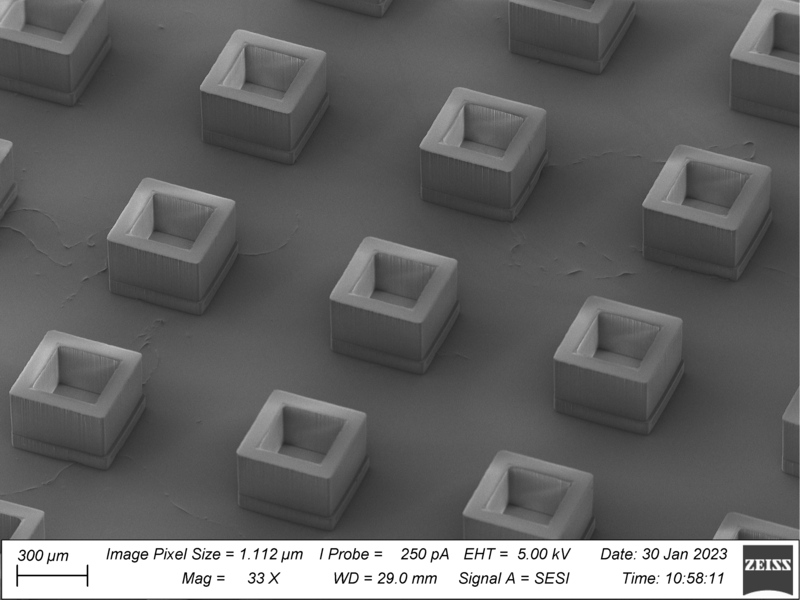
Photo provided by David Mankus
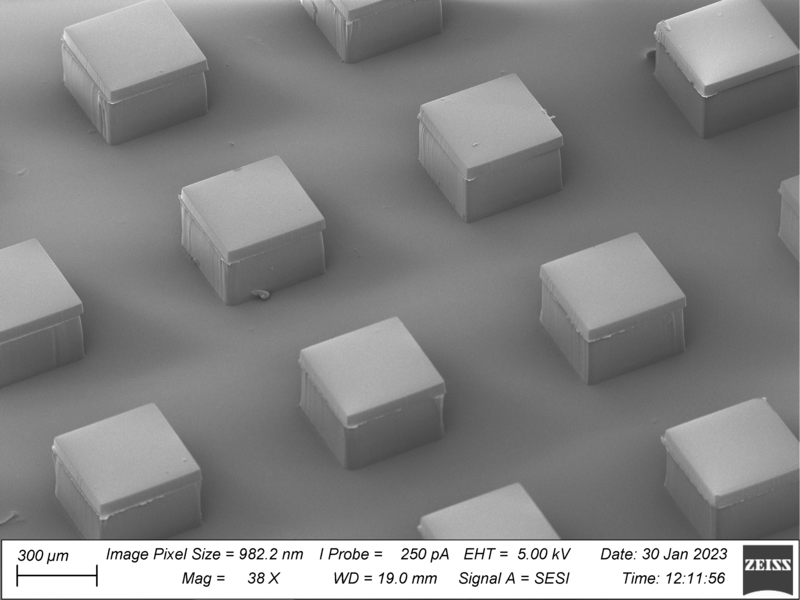
Photo provided by David Mankus
A single shot can protect a child from a life-threatening disease. Yet for the children living in the poorest regions, that protection remains out of reach. Of the 1.5 million who die each year due to preventable infections, 99% live in low- and middle-income countries.
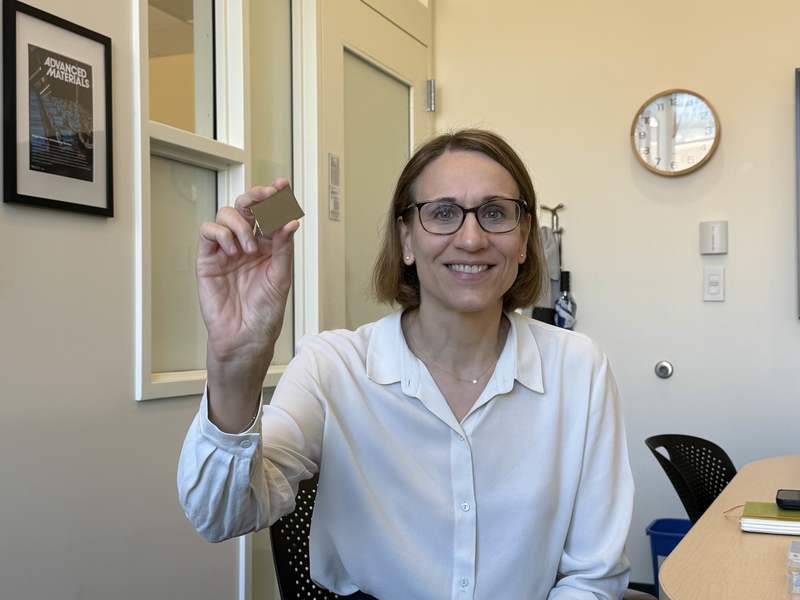
Koch Institute principal investigator Dr. Ana Jaklenec PD ’13 has been working on developing cheaper and more effective vaccines. Through her research on single-injection vaccines, Jaklenec hopes to make immunization more accessible.
Curiosity in polymers
Though she’s a leading figure in the biotech industry, Jaklenec did not come from a family with a scientific background; her dad was a pilot and her mom studied French literature. She discovered her passion for science in a high school chemistry class. “We made banana flavoring,” Jaklenec recalled. “[We] just mixed a bunch of liquids and all of a sudden, [we] smelled it. It’s this idea of making things from invisible [stuff], almost like magic.”
After completing a PhD in biomedical engineering at Brown University, Jaklenec came to MIT to pursue postdoctoral studies under Koch Institute Professor Robert Langer. It was here that she became fascinated by the potential of polymers — large molecules made of small repeating units. Polymers are central to biomedical research, and it was their versatility that intrigued Jaklenec. “They’re in everything in our life,” she emphasized.
As it turns out, polymers are one of the key tools Jaklenec’s lab uses to make life-saving treatments more accessible.
The single-dose vaccine
Oftentimes, vaccines are administered in multiple doses at different times to maintain the body’s protection against a certain disease. However, on Oct. 1, Jaklenec presented a solution during the MIT.nano Summit that would eliminate multi-dose injections by packing the entire vaccine into a single injection.
In 2018, Jaklenec worked with Langer to show how two doses of the polio vaccine could be delivered at once using a polymer called poly(lactic-co-glycolic) acid (PGLA) that encases it. “[Fewer] syringes and needles are used, so [fewer] doctor visits are needed. There’s an added cost to having everything in one injection, but [overall] it costs less than multiple visits,” Jaklenec explained.
To Jaklenec, PGLA has one characteristic that makes it the ideal polymer: its ability to degrade. “By changing its molecular weight, we can change when or how long it takes for it to degrade,” she said. However, as it breaks down, PGLA makes its surrounding environment acidic, which damages the vaccine and reduces its effectiveness.
In search of a solution, Jaklenec’s team turned to polyanhydrides — biodegradable polymers that create a less acidic environment when they break down. But there was another problem: polyanhydrides are difficult to manufacture. Due to the polymers’ physical properties, solvent-based methods didn’t work, so Jaklenec’s lab spent years looking for ways to create the precise structures necessary for a single-injection vaccine. Ultimately, they found a solution involving an unexpected combination of methods from microelectronics and semiconductor manufacturing.
Using a special technique called StampEd Assembly of polymer Layers (SEAL), Jaklenec created particles that release vaccine doses at different times mice. First, she used silicon molds to shape polyanhydride cups made with microfabrication technologies. Then, she filled these cups with the vaccine antigen, promptly sealing them afterward.
“We had to add lids to seal the cups, and that required [careful] alignment with the base,” Jaklenec said. She accomplished this with a mask aligner — a core tool in the fabrication of microelectronics that positions the lid and the base with high precision.
Although clinical trials may not start until 2027, Jaklenec is working with other researchers to launch a company and raise money for developing good manufacturing practices, ensuring the SEAL process meets established regulatory and safety standards. The team is also scaling production so millions may receive these single-injection vaccines in the future.
Mucosal vaccinations
Generally, vaccines are administered through injections into the bloodstream or tissue. These types of vaccinations are called parenteral vaccinations. However, Jaklenec is exploring an alternate type of vaccine: mucosal vaccinations.
Unlike parenteral vaccinations, mucosal vaccinations are taken orally. For example, the global polio eradication movement used the mucosal oral polio vaccine (OPV) from the 1960s to the 2000s due to its ease of administration and low cost of manufacturing.
Nowadays, however, most vaccines are injected into the body. While these injected shots are “very safe,” Jaklenec noted that they don’t provide a type of protection called mucosal protection, which helps the body fight off infection in the gastrointestinal tract.
Without mucosal protection, copies of the virus can still linger in this tract, where they may mutate into new virulent strains. “In Israel, where there are really high vaccination rates; [researchers] looked at the sewer system and saw the virus,” Jaklenec said.
To address this, Jaklenec’s lab also focuses on oral vaccinations that provide mucosal immunity. In addition to being more effective, oral vaccinations will also be cheaper to make and avoid selective pressure on the virus to mutate the way a parenteral vaccine might. Specifically, in collaboration with Harvard Medical School Professor Ulrich von Andrian, Jaklenec has developed a mucosal treatment derived from Vitamin A. “They give a signal that tells the immune cells to protect the gut,” Jaklenec explained.
Steps towards affordable healthcare
In developing countries, where infrastructure, storage, and communication may be unreliable, vaccines can degrade and lose their quality.
According to Jaklenec, the solution is decentralized manufacturing: producing vaccines locally and on demand rather than relying on large, commercial factories. “You could give more power to local people in their communities,” she said.
Jaklenec also plays a key role in researching microneedle vaccine patches, which are small, painless arrays of tiny needles designed to deliver vaccines through the skin instead of a traditional injection. Her efforts in decentralized manufacturing would primarily focus on creating these patches.
“Then [other people] can make these patches there and easily administer them. They don’t need these big needles, sharps containers, and hazardous waste [disposal],” Jaklenec said.
From academia to practice
As the co-founder of several companies — Particles for Humanity, OmniPulse Biosciences, and Vitakey — that translate lab discoveries into commercial therapeutics, Jaklenec must balance the complexity of her lab’s technology with the resilience needed for practical use. “Manufacturing in a simple way is important because it also lowers cost. And the process becomes more robust,” Jaklenec said.
She also sees academia as a breeding ground for exploration. “Academia [provides] a safe place to experiment and innovate, and then it self-selects the ideas that are feasible to commercialize and bring to people,” Jaklenec explained.
In her work, Jaklenec also collaborates with global health stakeholders, including non-governmental organizations, governments, and companies, to gather data on local needs to analyze existing priorities and lab-driven solutions.
“We have a very close collaboration with the Gates Foundation, [with] all these partners and stakeholders that have eyes on the ground and can communicate the pressing issues in specific areas,” Jakenec said.
That, in turn, provides Jaklenec with opportunities to test her developed technologies to assess what works and what doesn’t.
For example, Jaklenec worked with Indian company Tata Chemicals to create fortified salt — salt with added iron to prevent anemia. However, the company has struggled to commercialize the final product, as the visibility of the dark iron in the salt prevents people from buying and using it.
“They’re giving us feedback from what they’re seeing in the market. That helps us know some of the things that we need to be thinking about,” Jaklenec explained.
In terms of the next big questions in vaccine delivery, immunotherapy, global health, and other biotech-related endeavors, Jaklenec highlighted that rapid developments in artificial intelligence may allow drugs to get to people faster.
“Over the next five to ten years, the biggest shift is going to be the use of AI to understand biological mechanisms for specific molecules or drugs, and also shortening [testing times] so [treatments] get to [patients] faster and perform better,” Jaklenec said.
As a leading biotech figure in both academia and industry, Jaklenec has made significant strides towards making accessible treatments. From single-dose vaccines to microneedle vaccine patches, her lab’s work helps ensure that the single shot that may save a child’s life can be accessible to all.